
Beyond the Resume: Strict Vetting for Special Education Staffing
News • Posted 06.17.2026
For school administrators and Special Education directors, the hiring process isn’t just about filling an empty seat. It’s a high-stakes decision. In Special Ed departments, a bad hire is more than a minor setback; it carries immense liability, complex legal risks, and most importantly, compromises the safety of vulnerable students.
When you are short-staffed, the pressure to onboard quickly is real. But cutting corners on screening is never an option. True peace of mind doesn’t come from skimming a resume; it comes from a rigorous, multi-layered credentialing protocol that leaves nothing to chance.
Here is a look behind the curtain at how a comprehensive vetting process handles compliance, background checks, and tracking before a professional ever steps into a classroom.
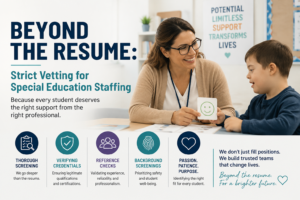
1. Primary Source Verification: Going Straight to the Root
An impressive resume is only the first step. True compliance requires validating every claim at the source. A thorough vetting process directly confirms all professional licenses, certifications, and academic degrees with the issuing state boards and institutions.
Whether onboarding a Speech-Language Pathologist (SLP), an Occupational Therapist (OT), or a specialized educator, this step ensures their credentials are active, valid, and entirely free of past disciplinary actions.
2. Comprehensive Federal & State Background Checks
Student safety requires absolute certainty. Standard local database searches are rarely enough. A secure screening framework requires exhaustive background checks, including:
-
Fingerprint-based criminal history checks via state and federal databases.
-
National Sex Offender Registry screenings.
-
OIG (Office of Inspector General) exclusion list checks to ensure professionals are cleared to work in programs receiving federal funding.
3. Specialized Clinical & Compliance Screening
Special Education requires a highly specific blend of technical skill and situational awareness. Beyond the legal paperwork, candidate screening should evaluate a professional’s practical readiness. This includes assessing their hands-on experience with Individualized Education Programs (IEPs), state-specific compliance laws, and positive behavioral intervention strategies.
The Standard: A candidate shouldn’t just be legally qualified on paper; they must be clinically and culturally prepared for the unique dynamics of your district’s classrooms.
4. Continuous Compliance Tracking
Vetting isn’t a one-time checklist completed on a hire’s first day. Regulations evolve, certifications expire, and medical clearances require updates. A proactive staffing partnership utilizes continuous compliance tracking, monitoring active professionals in real-time to catch upcoming expirations (like TB tests or licensure renewals) months in advance. This prevents administrative gaps and keeps classrooms running smoothly.
De-Risking the School Year
Alleviating the administrative burden of hiring isn’t just about finding personnel; it’s about mitigating risk. By maintaining strict, transparent compliance standards, districts can protect their students and defend their budgets against liability.
This rigorous, multi-step process is exactly how Temporary Staffing Professionals handles every candidate we provide. By managing the intense credentialing and background tracking from end to end, we ensure that when you source Special Education professionals through Temporary Staffing Professionals, you get the qualified support your classrooms need without the administrative risk. This allows your leadership team to focus energy where it matters most: delivering high-quality education.
Share This Article