
Remote vs In-Person Special Education Support
News • Posted 04.22.2026
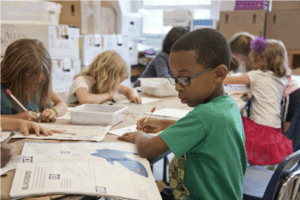 In today’s evolving education landscape, remote vs in-person special education support has become a major consideration for school districts, administrators, and staffing partners. As technology expands access to services, schools are increasingly evaluating whether virtual or face-to-face support leads to better outcomes for students with diverse learning needs.
Both approaches play an important role in modern education. The key is understanding how each model works and when to use them effectively.
What Is Remote Special Education Support?
Remote special education support (often called teletherapy or virtual services) allows specialists such as speech-language pathologists, behavioral therapists, and special education teachers to work with students online using video conferencing and digital learning tools.
Organizations like the Council for Exceptional Children and Understood.org highlight how virtual services have helped expand access to specialized support, especially in underserved or rural areas.
Pros
- Expands access to hard-to-find specialists
- Flexible scheduling for schools and families
- Can reduce operational and travel costs
- Helpful for rural or remote districts
Cons
- Limited hands-on instruction
- Potential student engagement challenges
- Dependence on reliable technology
- Reduced in-person social interaction
🔗 External resource: https://www.asha.org/practice-portal/professional-issues/telepractice/
In-Person Special Education Support
In-person support takes place directly in classrooms or school settings, where specialists work face-to-face with students.
Pros
- Stronger student engagement
- Hands-on, real-time instruction
- Immediate feedback and adjustment
- Supports social and emotional development
Cons
- Ongoing staffing shortages in many districts
- Higher long-term costs
- Limited flexibility in scheduling
- Geographic restrictions
🔗 External resource: https://www.edweek.org/teaching-learning/special-education
Remote vs In-Person Special Education Support: Key Insight
There is no one-size-fits-all solution. The effectiveness of remote vs in-person special education support depends on student needs, service type, and staffing availability.
Most districts find success by blending both models rather than choosing just one.
The Hybrid Model Approach
Many schools are now adopting a hybrid approach, such as:
- In-person paraprofessionals supporting daily classroom needs
- Remote specialists providing therapy services
- Virtual collaboration for IEP meetings and planning
This model improves flexibility while ensuring students still receive consistent support.
Staffing partners play a key role in strengthening special education services by:
- Filling critical staffing shortages quickly
- Providing both remote and on-site professionals
- Supporting continuity of services during transitions
- Helping districts scale support based on student needs
👉 Learn more about our approach to staffing solutions:
- Internal link: Temporary Staffing Professionals Overview
- Internal link: Find Talent
When it comes to remote vs in-person special education support, the most effective solution is often a balanced, flexible approach. Hybrid staffing models allow schools to expand access, improve efficiency, and better support student outcomes.
Share This Article